Note 2018-06-05: Eldritch Realms has been renamed to Magonomia
Here we are at the end of another year. It's time for me to start communicating more often and in more detail about Eldritch Realms. We have a long way yet to go before we schedule the Kickstarter campaign -- I can't yet predict when that will be -- but make no mistake, we have made a lot of progress this year. Read on for details.
[Edit - removed an obsolete paragraph about the old name of the game]
State of the Manuscript
We're still working on the manuscript. We have four authors, including myself, typing away like an army of woodpeckers right now. Our immediate goal is to get the minimal elements of a playable game assembled by the end of January so we can begin the first round of external playtesting.
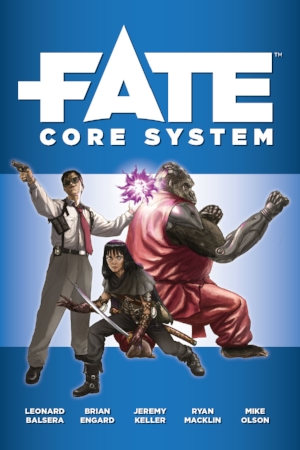
The basic rules are based on the Fate Core System, as I've previously announced. The more I play the Fate-based Eldritch Realms rules, the more I like the basic Fate game engine. A lot of games take some steps to encouraging roleplaying (instead of just killing monsters and grabbing their stuff): the Fate Core System goes farther than any game I've seen lately. Like chess, it's relatively simple to learn and has a lot of depth (OK, maybe not as much depth as chess, but more than checkers!). I did find, after a few months of playing the Eldritch Realms draft, that the Fate Core System book can be hard to learn from. I think that's because the Fate Core System book is really a framework for making your own roleplaying game, and assumes a corresponding level of experience on the part of the reader. I've gone to some effort to re-organize the rules and explain them in as straightforward a manner as possible.
Character creation is a part of the rules that we're rewriting for our purposes. Eldritch Realms is a game where everyone plays a wizard. How your character got her powers is going to be a big deal.
Magic is going to be unlike other Fate-based games I've seen. Eldritch Realms has a fully-developed magic system. If you're familiar with Fate, the magic system makes full use of the "Fate fractal." Spells become a thing in the game (called "Extras" in Fate lingo) and they can have Aspects, Skills, and other mechanical attributes. Wizards will specialize in one of the "sciences" of magic, such as astrology, alchemy, or what we're now calling "sorcery" (formerly, "conjuration"). Each science has a list of spells you can pick from. There is some overlap between the sciences but each one has individual strengths and weaknesses. Magic is designed so that a whole party of three, four, or five wizards can work together and complement one another's abilities.
Some of the sciences have changed since I posted about them in July. I'll have more to say about the changes once we've met the writing deadlines that are currently bearing down on us like the Spanish Armada.
Spells are well along in development. We've got about 120 different spells written so far. That's a decent complement of spells for three of the five sciences but it still needs some broadening. The kinds of things wizards can do include turning invisible (that's a common spell in Renaissance grimoires), flying through the air, forecasting future events, protecting themselves from weapons, and scrying on distant places through a crystal ball. A beginning wizard will know about 10 different spells, rated from weak first-Degree spells up to the fourth Degree, which has powers like flight or shapechanging. There are more-powerful spells of fifth and sixth Degrees, which wizards can attain by gaining experience.
Enchanted spirits, from ghosts to fairies to invisible "daemons," are central to the folklore of the period. Our chapter on spirits hews closely to Renaissance-era writings. That folklore can be surprising at times. For example, ghosts have physical bodies: you can touch them. We found that the more closely we tried to stick to historical sources, the more interesting spirits became. In hindsight, that shouldn't be surprising: people have been telling ghost stories and fairy tales for a very long time. The Spirits chapter was written by veteran game designer and former professional ghost hunter Christian Jensen Romer, one of the three other team members whom I'll introduce properly in a future post. Suffice to say, we've put as much energy and creativity into interpreting those historical sources for use in a game as we have into making spells. I think the Spirits chapter is going to be really engaging and unlike other games that I know of!
Historical information is in development but not as far along as the magic and the mechanics. We're aiming to give players enough material to spark their imaginations and to develop a sense of place, but we're not trying to condense a shelf full of history books into a chapter or two of Eldritch Realms. I've been saying since 2016 that "all the history you need to know, you learned (or will learn) in high school." We assume everyone knows who Queen Elizabeth I is, or knows how to use Wikipedia. The value we can bring by using history lies in helping players make stories about wizards and magic where you can use historical window dressing. For example, theater was wildly popular, but also vaguely disreputable. Lots of people went to the theater to have clandestine meetings, and didn't always pay much attention to the performances. We're continuing to do historical research and assemble relevant notes -- among the four of us, we've read a couple of dozen books already -- and will be expanding the historical aspects of the setting as development continues through 2018.
Internal (Development) Playtest
We've been playing Eldritch Realms with members of the development team and a couple of close friends, on and off since we started the project in 2016 and very steadily since September 2017. The playtest games are a lot of fun. I'm certain the final product is going to appeal to a lot of people. The playtest games have also revealed a few design decisions that seemed like a good idea, but didn't play well. We've been going through the same process a new group of Eldritch Realms players would experience, learning (in our case, inventing) the rules as we go. We've discovered quite a few sticking points: things in the Fate system or in our magic system that were confusing the first time. Having experienced the learning curve of our own game, we're revising as we go to make learning as painless as possible, without "dumbing down" the rules.
We realize that gamers are smart people who, like us, are willing to learn -- and we also realize there are a lot more fun things to do that struggle with a roleplaying game that's poorly explained or insufficiently tested.
I'm actually a player, not the GM, in our internal playtest game. I'm playing an alchemist named Jonas who is a law student and a bit of a rake. I'll have more to say about Jonas's adventures as well, as I start putting this blog to more frequent use.
Internal playtesting will continue throughout development, until I have to pry the manuscript out of the authors' clenched fingers and send it to the printer.
This is going to be a good game, if I do say so myself.
Private (Alpha) Playtest
Our next big project milestone is coming up sooner than we're totally comfortable with: initial, invitation-only playtesting with some hand-picked groups of friends. This will be what software engineers call an Alpha test. These Alpha playtests will be starting in February and continuing for a few months. We will also be soliciting review feedback from some knowledgeable friends who may not be able to commit to regular play, but can help us strengthen and clarify the manuscript.
I can't really predict what will happen after the Alpha test starts. We are willing to make major changes to the manuscript based on Alpha feedback, but I'm not certain we will have to. I'm not going to be very transparent about Alpha playtesting because if we find out certain rules, spells, characters, etc. aren't working, we'll change them before the public ever sees them. I'm not planning to reveal too much about how the sausage gets made.
I do plan to proudly tell you about the proverbial "sausage" once it's fit for the table.
Gen Con 2018
Registration for Gen Con 2018 begins January 14, 2018. The actual convention is August 2-5.
Shewstone Publishing missed Gen Con in 2017 because I was in the middle of a transition into a new day job. We will be back with a roar in 2018: I'm planning to present a seminar on using elements of history in your games or fantasy fiction, and we will be playtesting Eldritch Realms with complete strangers. Or, as I prefer to say, with friends we haven't met yet.
I'll be working feverishly to get ready for that. August 2 might seem a long way away to you, but to me, there's a lot of work to do between now and then.
Beyond August
I think you can see, we're now working steadily and productively. If Eldritch Realms were a house under construction, we'd be at the stage where the frame is finished, the roof and exterior walls are on, and we are laying in the plumbing and the wiring before putting up the drywall. Much like building a house, a good deal of the early work was time-consuming but not visible.
We're aware there are a few dozen friends and followers who are eager to see this game completed and get it in their hands. Believe me, no one is more eager to see this project completed than I am! That said, the authors and I are all working on this part-time. I've written parts game books before but this is my first time planning and managing the whole project -- there is a lot more to making a game than just writing it! The only thing more important than getting this done soon is getting it done right.
What I'm saying is, I want to create realistic expectations. From where we stand now, there is likely to be one, maybe two rounds of Beta testing following the Alpha round. Each round of testing takes about three months. If things go extremely well, we may launch the Kickstarter toward the end of 2018. More likely, it will happen in 2019, and I can't even promise it will be in the first half.
For those of you who have been following us from the early days, Beta rounds of playtesting will be open to the public. You'll have an opportunity to see the manuscript and to help it take shape, if you have some time to donate.
Whether your schedule permits you to playtest, or you have to wait to see Eldritch Realms after the Kickstarter is finished and the books have all been shipped, if you enjoy it as much as I've enjoyed the playtest game, our efforts will have been well spent.
Thank you for reading and for following Eldritch Realms. And happy New Year!